家和万事兴
国家移民管理局:口岸出入境流量快速增长_我的网站

一 | 4月18日,国家移民管理局召开新闻发布会,介绍促进中外人员往来系列政策措施取得的成效。
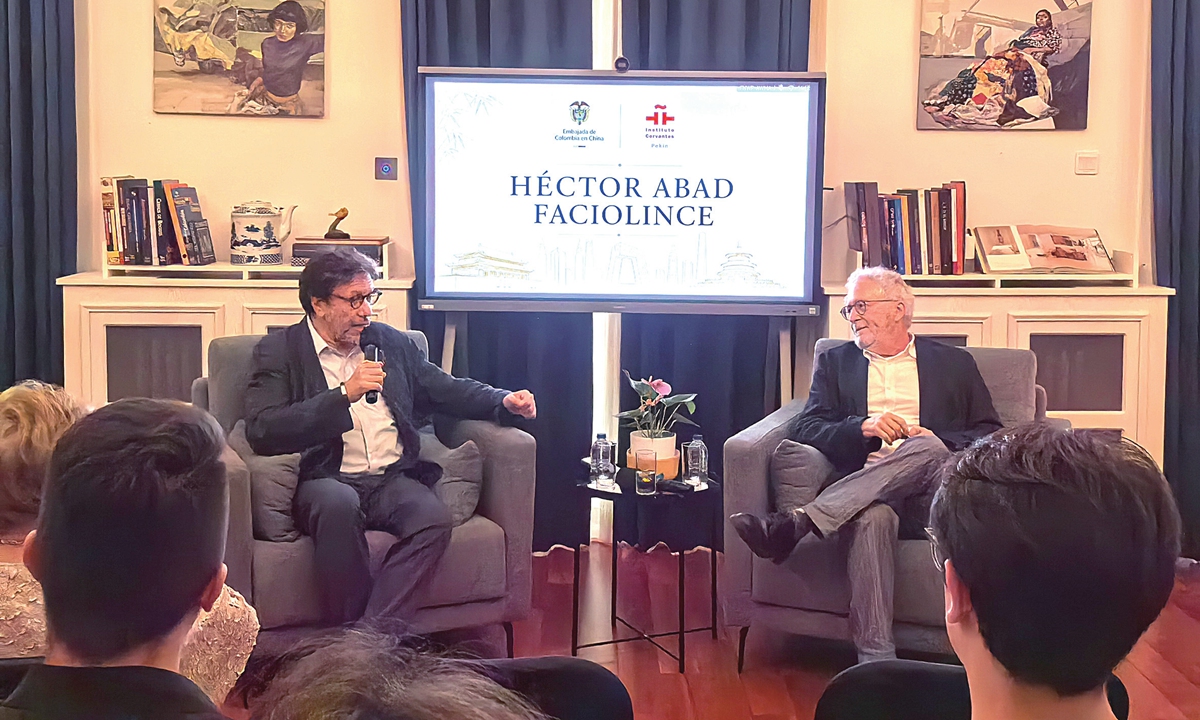
The Embassy of the Republic of Colombia in China hosted a colloquium with Héctor Abad Faciolince, a Colombian novelist, writer and journalist. The writer shared on Tuesday his growth journey from a journalist to achieve his dream as a writer, his observation of the Colombian society and his impression about the changes in China.
In a fully packed hall, Minister Plenipotentiary Jose Fernando Bermúdez Cendales said in his opening remarks that the event is part of an initiative to bring Colombian culture closer to the Chinese public while simultaneously creating new spaces for dialogue and exchange between the two countries.
Bermúdez said that Abad's visit to China offers a particularly valuable opportunity to showcase the richness of our literature and to strengthen the cultural and human bridges connecting Colombia and China.
The session, chaired by Santiago Gamboa, writer and minister counselor of the Colombian Embassy, focused on the career and body of work of Abad and in particular, El olvido que seremos (Oblivion: A Memoir).
Abad's book is a seminal work of contemporary Colombian literature in which personal and family memory engage deeply with Colombia's recent history. Its translation into Chinese allows this story to reach new readers and represents an extraordinary opportunity to bring both societies closer together through literature, per some commentators.
"We hope this gathering will be an open conversation among cultures, readers, and experiences, and a new expression of the friendship that Colombia and China continue to build," said Bermúdez.
Abad, one of the most important voices in contemporary Latin American literature, shared with the Global Times that this is his second trip in China. The last time he visited the country was two decades ago.
This time, in his eyes, China has changed a lot. In many ways, the country stands for the future of the world.
Abad said he is surprised to see how much Chinese people are depending on the electric devices and network to communicate in a virtual world, and said that he felt "like an alien."
Talking about his interaction with readers in Shanghai, Abad smiled, saying that the readers selected some phrases from his book and asked him to write down as part of the autography and signature for them.
In his book, El Olvido Que Seremos (The Oblivion We Will Be), which is acclaimed as a "love letter from a son to his father," is not only a deeply affectionate look back at familial bonds but also a courageous attempt to defy oblivion.
Rooted in true events, The Oblivion We Will Be chronicles the life of his own father. Abad noted that his father was killed in August 1987 - nearly forty years ago.
In the Western literary tradition, a father is often portrayed as a distant or even negative figure. His father, however, was "totally different - a man of love and deep sense of responsibility in both the public sphere and his family life."
Such image of a benevolent, non-authoritarian father has impressed his Chinese readers as well, he said.
As a physician, Abad's father dedicated his life to addressing fundamental issues affecting people's well-being, such as drinking water quality and public health, steadfast in the belief that the world could be made better through action.
Abad's work addresses themes such as memory, violence, inequality, and the human condition, deeply marked by the murder of his father, an event that inspired his most iconic book, The Oblivion We Will Be was published in Chinese by Writer's Publishing House in Beijing in July.
。今年一季度,外国人来华同比大幅增加,较2023年同期增长3倍多。外国人来华以旅游观光最多,占到三成以上,其次为商务、探亲访友、工作、学习等。 口岸出入境流量快速增长。

二 | 今年一季度,粤港澳陆路口岸港澳居民与内地居民“北上南下”热潮持续,出入境流量已恢复至2019年同期水平,广深港高铁西九龙站、港珠澳大桥、莲塘、横琴等口岸屡次刷新口岸单日出入境峰值纪录;陆地边境口岸流量稳步恢复,磨憨、打洛、霍尔果斯等30余个口岸已超过2019年同期水平;大型空港口岸流量增长迅速,上海浦东、广州白云、深圳宝安、厦门高崎等枢纽机场已恢复至2019年同期的七成以上;随着国产大型邮轮“爱达·魔都号”投入商业运营,国际邮轮公司陆续回归中国市场,上海、天津、厦门、深圳等邮轮口岸陆续迎来出入境邮轮通关高峰。 国家移民管理局推出一系列促进中外人员往来的政策措施。去年起,中国先后对新加坡、文莱恢复入境免签政策,对法国、泰国、瑞士等13个国家持普通护照人员实行入境免签政策。截至目前,上述15国共有98.9万人次外籍人员免签入境来华,占到相关国家来华人员总数的六成多,呈现上升趋势。 国家移民管理局相关负责人介绍,政策施行以来,共有21.1万人次外籍人员通过申办口岸签证入境,共计25.3万人次在华外籍人员申请办理签证延期、换发、补发和停留居留证件。

三 | 2月9日,国家移民管理局宣布扩大59国人员免签入境海南事由,政策实施两个多月时间以来,共有4.9万人次外籍人员通过免签入境海南。国家移民管理局预计,随着国际航线航班逐步恢复,政策知晓度逐步扩大,入境海南外籍人员数量将持续稳步增长,政策效果将进一步显现。 国家移民管理局相关负责人介绍,为应对口岸出入境流量快速增长,确保口岸通关安全顺畅,国家移民管理局密切监测口岸实时流量,并在节假日期间发布口岸通关“两公布一提示”,确保客流高峰时段及时削峰、动态削峰,进一步提升口岸通关保障能力。 《 人民日报 》( 2024年04月19日 07 版)。
Current article:http://mw5zb9.gamajionghuanmuniuzhuanguchu.cyou/list_1jpon1/jnekwmd.html
Published on:12:50:09
 青春派
青春派 万水千山总是情
 极度深寒
极度深寒 凤凰大视野
凤凰大视野 四大名捕
四大名捕 请回答1988
 白鹿原
白鹿原 伪娘
伪娘


